
Inexplicable road works explained
Motorists traversing the M1 near Castle Donington have long been baffled by the inexplicable 50 mph section that seems to stretch to the end of the universe. The works, starting from just south of Junction 27 and extending past East Midlands Airport to infinity and beyond, has left drivers scratching their heads and questioning the sanity of road authorities. However, an unlikely and somewhat embarrassing explanation has finally emerged.
Mr Ian Ept, a spokesperson for the agency responsible for the road works, sheepishly admitted, “The truth is rather embarrassing. The government gave us a generous grant to fix something, I’m not sure what it was exactly but I’m sure it’s important. But a paperwork cock up left us with £50 million worth of traffic cones.”
With no space to store the surplus traffic cones, the agency made the rather unconventional decision to utilise the roads themselves as storage space. “We simply don’t have enough space to store the damn things, so the next best place is on the roads themselves. That way we save the hassle of setting it all up when we eventually need to do something,” explained Ept.
As motorists struggled to navigate through the labyrinth of cones, some couldn’t help but marvel at the sheer absurdity of the situation. “It’s never-ending,” remarked one frustrated driver, “I swear I heard something growling, it was probably the driver of an Audi but I wouldn’t be surprised if it was a minotaur.”
Social media’s reaction to Mr Ept’s announcement was met with a universal groan of “ooooooohhh that’s why,” followed by “space-saving my arse,” as many questioned whether the agency had stumbled upon a revolutionary new approach to infrastructure maintenance or simply lost its way in a bureaucratic labyrinth of its own making.
For now, the mystery of the never-ending road works remains unsolved, leaving motorists scratching their heads and wondering just how far down the bureaucratic rabbit hole this comedy of errors will go. Mr Ept, the official responsible for overseeing the project, could only offer a sheepish shrug and a promise to “double-check the paperwork.” However, it’s likely to be little consolation for those now trapped forever in the traffic-cone-induced purgatory.
“We’ve got big plans for the other bits of motorway under the works. I PROMISE YOU! We just need to decide what they are.”
________________________________________________________________________________
Cars that did not change the world
In honour of Autocar’s feature on 39 cars that changed the world, here’s a selection of cars that were supposed to be revolutionary but were actually very, VERY dumb
Chevrolet SSR
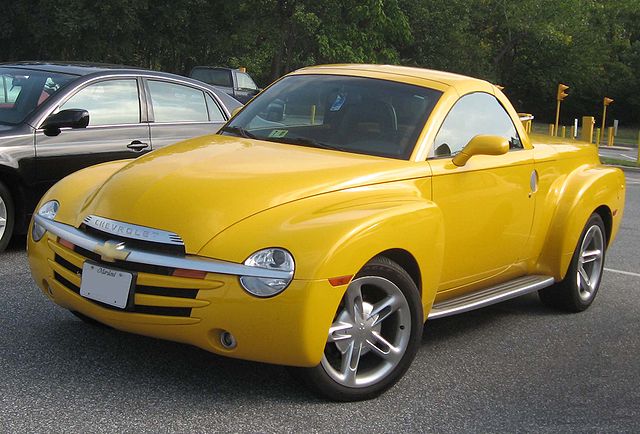
Americans love pickup trucks. Americans are also rather fond of convertibles. And in the early 00s retro styling had become quite a trend, see the Fiat 500 for example. In general however these ideas tend to stay separate. But one day, someone in a general motors meeting room presumably stood up and said “I KNOW, LET’S BUILD A CONVERTIBLE PICKUP TRUCK!”
Now upon thinking about it for 5 seconds, this idea is floored. By the time you’ve made some space for the roof to fold away and beefed up the chassis so it doesn’t split in two, you end up with a car that’s neither utilitarian nor sporty.
However, this was General Motors in the early 2000s where sanity was in short supply. And shockingly what resulted was all of the above. To top those issues off, Chevrolet packaged the car in some horrible retro styling that only appealed to those with a desperate need to peacock their way around a Californian Boulevard. Sales were predictably as floppy as a Basset Hounds ears and the SSR was killed off after 3 years in 2006.
Chrysler’s Turbine engine

“Could we use a jet engine to power a car?” A shit tonne of money and some R&D later the Chrysler turbine car resulted. An Instagram reel did the rounds recently touting this as a ‘could-have-been’ future. It could be run on unleaded petrol, diesel, Kerosine, Jet fuel, cooking oil and even Chanel no.5. Basically if it was liquid that could combust it would work. The then-president of Mexico even ran one on tequila.
Sounds marvellous doesn’t it and exactly what the world currently needs. It also didn’t produce any hydrocarbons or carbon monoxide. Unfortunately what that Instagram reel didn’t mention were the drawbacks. Point one is a very high NOx output which is even worse than CO2. And while it could run on anything, the fuel economy was catastrophic. The engine’s response was also extremely leisurely and the cost of building them was far too much. The project was finally killed off in 1979, A surprisingly long time to be fair.
Noble research nonetheless.
Peugeot 1007

The city car is a fairly well-defined formula. Small engine at the front, two doors, front seats you can recline, 2 seats in the back for 2 passengers to fold themselves into and a boot for your shopping. Peugeot’s new city car however would utilise two sliding doors from an MPV. The idea is that you could park your Peugeot in the tightest of spaces and still have room to get out.
Problem 1: Even if you could get out of your car, What was the poor sod parked next to you supposed to do? Unless he also had a 1007 his only option would be to dent your door.
Problem 2: sliding doors are heavy. And the small engine it was given wasn’t enough to make up for a car with the density of a black hole. While it could accelerate, the car’s own sliding doors probably had nippier and lustier performance than the car itself.
Peugeot expected to sell 17,000 a year and it sold less than half that in the 3 years it was in production.
Aston Martin Cygnet
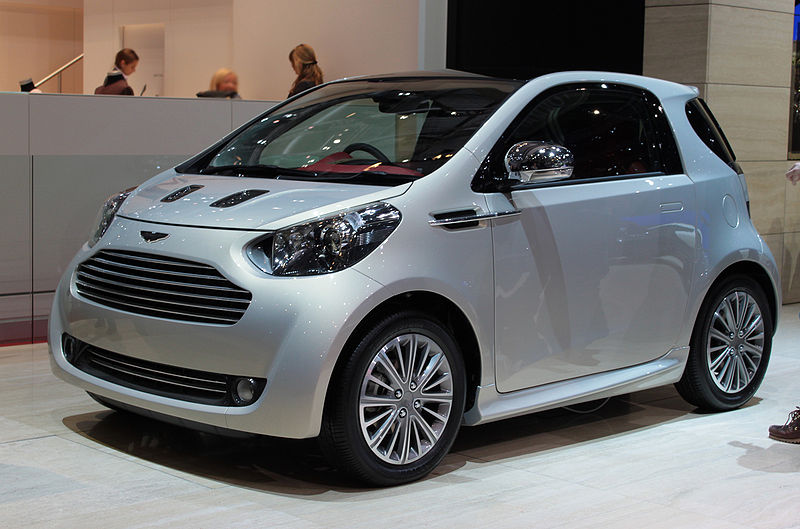
In keeping of cars that aren’t needed, our next entry is another city car in the form of the Aston Martin Cygnet. Aston Martin claimed it was to see if there was a market for a luxury city car. Presumably the same people were in the market for a fire resistant umbrella. The cygnet itself was nothing more than a rebadged Toyota IQ with a cow’s worth of leather added and a new grille. Customers read what the car really was like a book. Surprise of all surprises at £30,000 compared to the IQ’s £10,000, Aston sold almost none and the cygnet changed basically nothing.
The kicker is however, it in all likelihood was never supposed to. The main reason for its creation was as an emissions loophole to lower Aston’s fleet emissions. The cynical bells. In fairness, it was cool when Aston stuck a V8 in one for the banter.
MG XPower SV

Before explaining what was wrong with this car we need to understand how MG Rover sank to this point. While GM lacked sanity, MG Rover’s dying days were presumably due to the management trying to run a car company while constantly sniffing glue.
After the Phoenix 4 of the Phoenix consortium bought MG Rover from BMW for £10. They started pouring money into projects they simply couldn’t afford. The slide into stupidity started with MG trying to bodge a Ford Mustang V8 into a ZT (the MG version of the Rover 75). They then kept pouring more money into finding any possible way to make this bodge job profitable, which it was absolutely NEVER going to be! 3 speed automatics. 2 seat roadsters ANYTHING!
The last gasp effort to save the company was the X-power SV, they may have gotten a bit wibbly with the City Rover but this was it, THIS was what would surely turn MG Rovers future around. MG bought the rights to an Italian concept supercar called the Qvale Mangusta. It had an all carbon fibre body, headlights from a Fiat Punto, that same mustang V8 engine for some very handy performance with an offered nitrous kit for 1000hp and a lot of time tweaking the chassis. This once again cost A LOT of money that MG Rover didn’t have. The problem that undid this car was absolutely no sane human being. One capable of tying their own shoe laces and flushing a toilet would spend supercar money on an MG. Especially when for not much more you could actually have a supercar. One not built in Longbridge and not built by a company that was 10 seconds away from midnight. The rumour is MG sold a grand total of 9 before they went bankrupt. And instead of saving the company it proved to be one of the final nails in the coffin for MG Rover. Were they really the Phoenix 4 or were they actually the 4 horseman?
________________________________________________________________________________
Lamborghini creates camo liveries

Italian supercar manufacturer Lamborghini has announced its latest innovation: urban camouflage liveries for its Huracan Sterrato model. The Sterrato, marketed as an off-road inspired variant of the iconic Huracan, is renowned for its rugged design and purported off-road capabilities. However, Lamborghini seems to be acknowledging a certain reality about the usage of these high-performance vehicles.
“With these new liveries, we’re embracing the reality of our customers’ lifestyles,” remarked Marco Merda, Head of the project. “Let’s face it, these cars will never go off road, they’ll spend their lives cruising around Monaco, Dubai, the particularly Twattish bits of central London and any other paradise for tax dodgers”
The decision to create urban camouflage liveries comes as no surprise to industry insiders, who have long speculated about the practicality of off-road supercars in urban environments. Despite their rugged exteriors and advanced suspension systems, the biggest test these vehicles will face will be the road outside Harrods.
“We’ve seen it time and time again,” commented automotive analyst Norma Stits. “Owners of these off-road inspired supercars are more interested in the image they project rather than the actual capability of the vehicle. It’s all about the status symbol.”
While some purists may scoff at the idea of a supercar adorned with camouflage paint navigating a so called “urban jungle”, for Lamborghini, it’s just playing to the brand’s strengths. If you’re after fancy driving stuff you go to Ferrari or McLaren for that. Lamborghini is just about making a bedroom poster
As for the Huracan Sterrato owners, they can now rest assured knowing that their prized possession will blend seamlessly into the luxurious surroundings of the world’s most glamorous cities, even if the rugged terrain remains nothing more than a couple of leaves on the road.
________________________________________________________________________________
Due to irritating things called exams, there’s going to be a little bit of a hiatus. We might throw something together in the meantime but for now,
Next issue: 28th May
 Dipsticks.blog
Leave a comment